
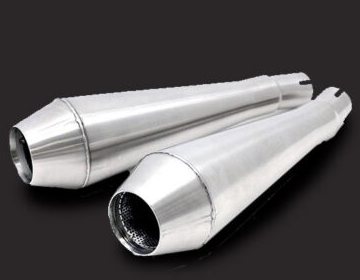
Chrome is a thin, hard layer over nickel and steel. It does not need aggression; it needs a clean surface, a fine paste and a soft cloth. Here is how we do it.
Wash first, polish second
Polish is not soap. Wash the part with warm soapy water, rinse and dry it fully. Road grit left on the surface becomes sandpaper under the cloth, and that is where swirl marks come from.
Work small sections
Put a pea-size amount on a folded cotton cloth. Rub a palm-size area in small circles with light pressure. The cloth turns dark within seconds — that is the oxidation and old wax lifting off.
Keep going until the haze breaks and you can see a clean reflection, then move to the next section, overlapping slightly.
Freckles and light rust
Small rust spots on old chrome usually sit in pinholes in the plating. Work them with the paste on a cloth wrapped around a fingertip, or with a soft toothbrush for knurled and textured spots. Deep pitting will soften but not vanish; plating that has flaked off cannot be polished back.
The final buff
Switch to a clean, dry face of the cloth and buff the whole part in long strokes. The residue transfers to the cloth; the thin protective film stays. Done regularly, each session gets shorter, because the film slows down new tarnish.
