
Tarnish is a thin layer of sulfides and oxides. On collectibles it can be history or it can be grime — decide which before you polish.
Decide about patina first
Some collectors value an old, even patina on coins, bronzes and antique brass. Polishing removes it, and it does not come back on its own. When in doubt, test on the back of the piece or a less visible edge.
Brass and copper
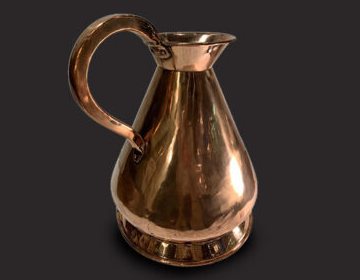
Lamps, candlesticks, bells, measuring cups, buttons. Use a little paste on a soft cloth, work in circles, and use a soft toothbrush for engraving and seams. Copper that looked hopelessly black often turns out to be solid and bright underneath.
Sterling silver and jewelry
Lay a clean white cloth flat, put a little paste on it and draw a chain through it, back and forth. Rings and flatware get a fingertip and a cloth. Buff with a clean cloth; rinse jewelry with stones carefully and dry it.
Plated pieces
Silver-plate and gold-plate are thin. Use light pressure, a small amount, and stop as soon as the piece is bright. You are cleaning the plating, not polishing the base metal.
